
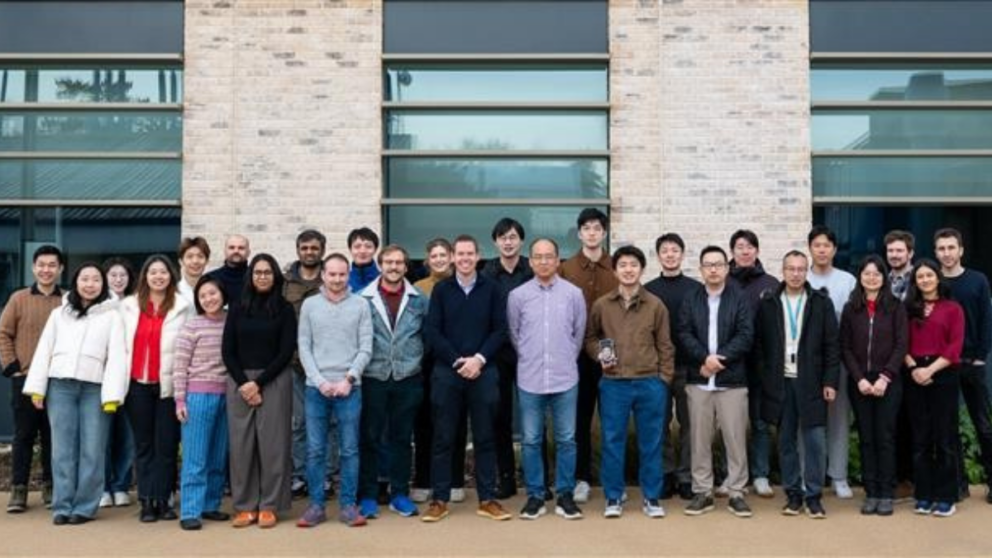
Paul Shearing is Professor of Sustainable Energy Engineering at the Department of Engineering Science and Director of the ZERO Institute. Earlier this year, Paul’s research group relocated to Building A here at Begbroke – we caught up with him on the move, how the group is settling in and the team’s priorities over the coming months.
Can you tell us a bit about your research group and the work you’re doing at Begbroke?
My research group focuses on battery technologies and how we can develop safer, more efficient and more sustainable energy storage systems. We work across the full spectrum, from understanding the fundamental science of how batteries operate and degrade through to developing technologies that can be translated into real-world applications.
A significant part of our work is carried out in partnership with the Faraday Institution, and I’m also the Royal Academy of Engineering Chair in Emerging Battery Technologies. In my role as Director of the ZERO Institute, our battery research sits within the wider context of the energy system, looking at how energy storage integrates with renewable generation, transport and the transition to net zero. That combination of fundamental science, engineering and systems thinking is what makes our work particularly exciting.
You’ve been the first to move into Building A. What difference will the new space and facilities make to your research?
The biggest advantage is having purpose-designed laboratory space that’s been built around the way we work. Bringing everything together under one roof means our researchers can collaborate much more effectively and move seamlessly between different stages of an experiment.
The new facilities also give us capabilities that we simply didn’t have before. They allow us to carry out more ambitious and challenging experiments, particularly as we continue to push the boundaries of battery research. Having access to modern laboratories and shared facilities will make a real difference to the scale and complexity of the work we’re able to undertake.
How does being based at Begbroke support your work?
Begbroke is a rapidly growing research community with innovation at its heart, and that’s exactly the kind of environment our group thrives in. The facilities here enable us to carry out research at a scale that simply wouldn’t have been possible elsewhere, opening up opportunities for larger, more integrated research programmes.
Just as importantly, Begbroke creates fantastic opportunities to work closely with industry. Those partnerships are essential for translating our research into technologies that can have real-world impact, and being part of this collaborative ecosystem helps accelerate that process.
What are your team’s priorities over the next few months as you continue to settle into the new space?
We’re now almost completely up and running, which is a real achievement given the scale of the move. Over the next few months, our focus is on completing the final elements of our battery safety facilities, commissioning some exciting new equipment and ensuring everything is operating at full capacity.
Alongside that, our priority is delivering the ambitious research programmes we’re already involved in while also looking ahead to the next phase of growth. That means developing new grant proposals, planning future equipment investments and continuing to build the capabilities that will enable us to tackle the next generation of challenges in battery technology.
