
Our new blog series – Innovation Insights – explores the innovation ecosystem, sharing founder stories, investment insights and practical advice from Begbroke.
Reading time: 5 minutes
By Dr Siobhan Dennis, Begbroke’s Engagement Manager
Chiralabs are one of OUSP’s longest-standing tenants. As well as providing expert pharmaceutical, chemical and physical analysis of substances and products in a wide range of fields, for more than two decades they have built a business around the sort of scientific problems that don’t arrive with instructions. Naturally, I wanted to find out more and Chiralabs kindly agreed to be featured in Innovation Insights. Here are some of the projects they could share!
How do you analyse something that isn’t there?
Think about the strangest thing you have ever been asked to research or analyse. I bet it wasn’t “holes and bubbles”. For Chiralabs, this was a genuine client query: what is causing these holes, or bubbles (depending on your perspective)? It is a surprisingly tricky problem when the thing you are being asked to analyse is, effectively, “nothingness”. Nonetheless, chemical clues and an answer were found.
And the interesting requests certainly don’t stop there. Their work has ranged from asking whether something really is Roman concrete, to investigating a supposedly ancient gold artefact, and even the mysterious discolouration of a Jacuzzi on a luxury yacht. The “ancient” artefact turned out to be particularly intriguing – analysis suggested it was made from melted-down shell casings, likely associated with the First World War.
From the lab to the Tower of London
In 2018, the moat at the Tower of London was transformed for Beyond the Deepening Shadow, a public act of remembrance marking 100 years since the end of the First World War. Each evening, thousands of torches gradually illuminated the moat.
Chiralabs’ scientific expertise was called upon to help ensure the torches performed as required, looking at factors including flame colour, burn characteristics, duration and consistency. It’s perhaps not the first project that springs to mind when you think of an analytical science lab in Oxfordshire, but that’s the point. Their science helped turn an idea into something that could perform reliably on a very public stage. It certainly sheds a new light on analytical chemistry (pun intended).
How do you recreate 100 years of ageing in a matter of weeks?
When a specialist working with traditional violin coatings passed away, the knowledge behind a particular varnish effectively went with them. Contents of their workshop, coffee cups and all, eventually made their way to the Oxfordshire countryside and Chiralabs were presented with the challenge of recreating it.
A violin coating needs to look good, remain chemically stable, be durable and, importantly, not ruin the sound of the instrument. Its acoustic properties, resonance and tonality all matter. However, this wasn’t the tricky part – old violins sound like they do partly because their coatings have aged, but waiting 100 years to better understand their composition isn’t an option!
So, Chiralabs worked to develop a coating that behaves like one that has aged for perhaps 100 years, but without the lengthy lead time. They combined chemistry and materials science with heritage, acoustics and a good deal of research to tackle it. Something to ponder the next time you are sitting at a classical concert!
What might be hiding beneath your football boots?
Not carcinogenic compounds, one would hope.
International concern had surrounded some substances present in the rubber crumb used on artificial football pitches, much of which is manufactured from recycled tyres.
Chiralabs supported analysis of samples from football pitches as part of an investigation into the chemicals present. Their analysis identified compounds of concern, contributing scientific evidence to a much wider discussion about the materials people encounter in everyday environments.
It’s an example of when something that initially sounds like a niche analytical job reaches much further, informing conversations on public health, regulation and decisions about materials used by thousands of people.
What if the display case is more dangerous than the visitor?
When you visit a museum and see a priceless artefact behind glass, it doesn’t take a scientist to recognise some of the risks posed by visitors and object-handling. The display cabinet itself probably receives less suspicion…
However, paints, adhesives, sealants, wood, fabrics, coatings and plastics can all release volatile compounds. Put the wrong material inside, or around a museum display and, over time, the very environment designed to protect an artefact could contribute to its deterioration.
Chiralabs developed its own SMART testing service (provided in conjunction with the National Conservation Service) to help establish whether materials intended for museums and conservation environments are suitable for use around valuable collections. Importantly, that testing doesn’t have to begin after a museum exhibit is built – they work with manufacturers of display cabinets, construction products and other materials before those products ever enter a heritage environment.
Variety is the spice of life
Violins, football pitches, museum cabinets, ancient materials and 10,000 flames at the Tower of London might appear to have very little in common. Scientifically, however, they share an important feature: they are questions for which a standard test, piece of equipment or analytical approach may not exist.
Chiralabs’ work has reached pharmaceuticals and human health, manufacturing, cultural heritage, music, materials, food and drink, environmental questions, regulation, public safety and major industrial investigations. The unifying factor across these domains is that the problem comes first, then the analytical technique follows.
This is where the company differs from a more conventional CRO offering. Rather than starting with a fixed menu of tests, Chiralabs can work across the analytical chain, from theory and experimental design through to instrumentation, measurement, methodology and data interpretation. Sometimes it means developing an entirely new method; sometimes it means modifying equipment to do something it was never originally designed to do, or even building new instruments from scratch.
So why Oxford University Science Park, Begbroke?
Initially, Chiralabs simply needed lab space, but the beautiful setting – with wildlife and green space on the doorstep – also won them over. Importantly, the space gave them proximity to the Oxford academic community as well.
Since then, Chiralabs have developed an expert investigative practice around the questions that don’t come with instructions – the measurements nobody quite knows how to take, and the product that keeps failing for reasons nobody understands. So, if your problem does not fit neatly onto somebody else’s list of services, Chiralabs might be exactly who you need to call – give them a challenge!
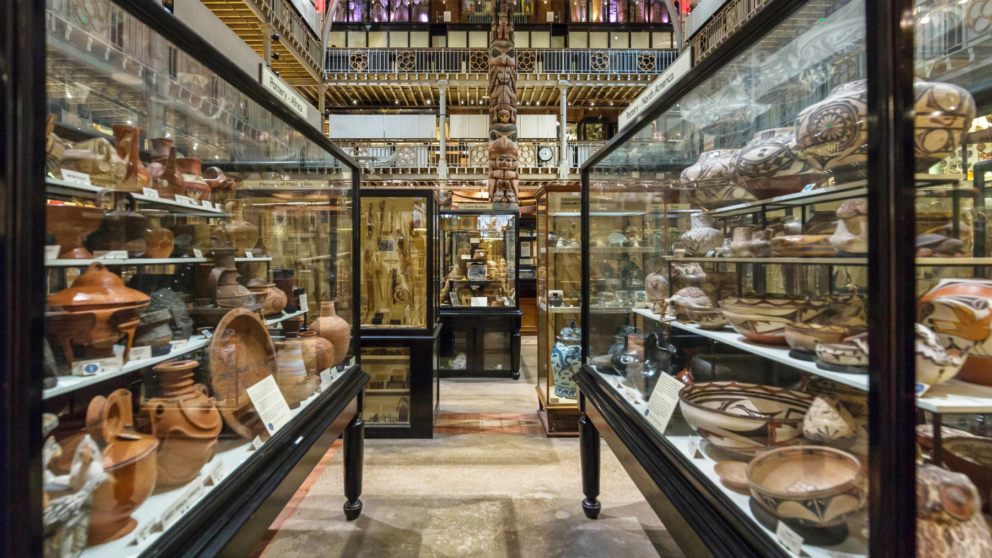
Stock image of the Pitt Rivers Museum, ©OUImages/Ian Wallman
