
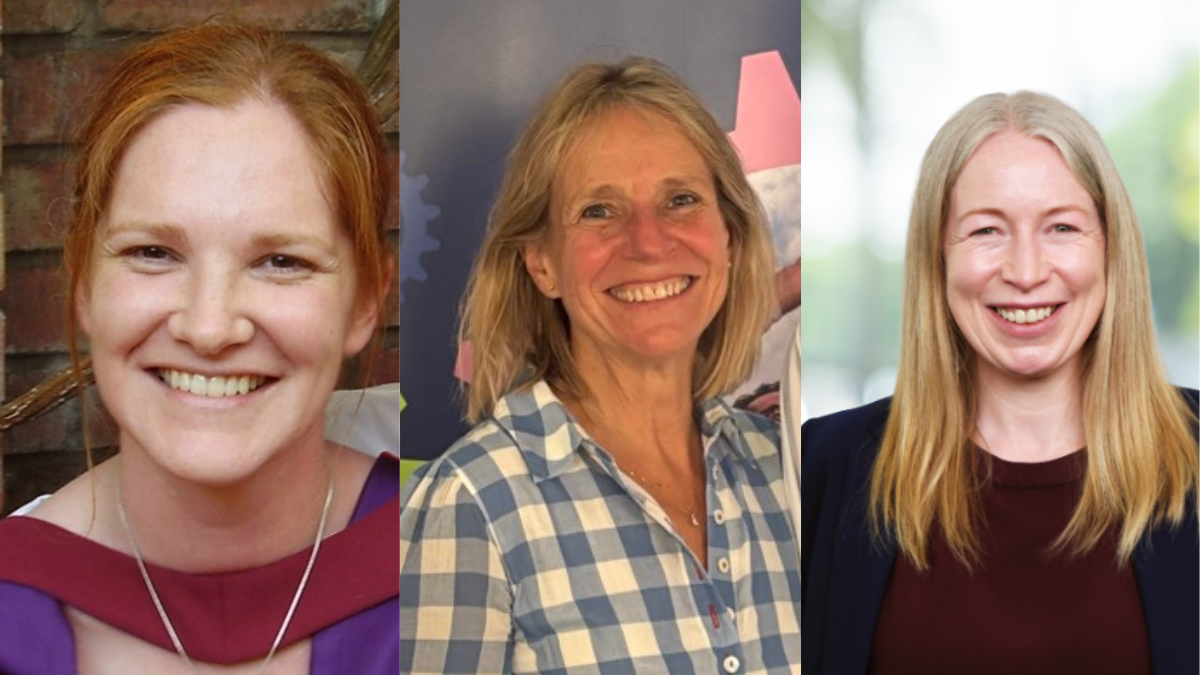
Wednesday 11 February, is the International Day of Women and Girls in Science, a global initiative celebrating the vital contributions women make in the field of science. To shine a light on the day, we spoke with three women from across Oxford University Science Park, Begbroke, representing industry, research and leadership.
Through their different roles, they discuss their work, what motivates them, the meaning of the day, and their advice for young women considering careers in science.
Elaine Oke, Director of Delivery at Adaptix Ltd
What does your role involve, and what do you find most interesting or rewarding about your work?
I work with many departments across Adaptix to deliver our products to market. This involves early involvement in the ideas stage, right through to design and testing, until it reaches customers. I love the variety of work, the challenges, and most of all, I love working with all of our great people! My role is to make sure we are working on the right things at the right time. Working together across so many teams with so many people is extremely rewarding, and when we see our products getting out to the world, we are very proud!
How has being part of the Begbroke community helped or influenced your work?
Being at Begbroke is great. We get the chance to meet interesting people from other innovative companies, and we often find ways of working together. There are so many great companies in one place. There are numerous gatherings, too and social activities, allowing everyone to mingle. I love it!
What does International Day of Women and Girls in Science mean to you?
It is a chance for me reflect on the progress I see around me, but also on the barriers that still exist. After more than 20 years in engineering and leadership roles, I’ve seen how visibility and opportunity can shape careers. This day matters because representation shows women and girls that they belong in science and what an impact they can have on the world around them. I have a 10-year-old daughter who is very interested in science, and I am reminded of the need to support and celebrate women who continue to pave the way for her.
What advice would you give to young women aspiring to become scientists, and how do you think we can better support women in science?
You don’t need to fit a stereotype to succeed in science; don’t be put off by thinking you don’t fit in. Curiosity and persistence matter most. If you are interested in a career in science, continue to ask plenty of questions!
Professor Helen Townley, Nanoparticles in Cancer Research Group at The Nuffield Department of Women’s & Reproductive Health
Can you tell us about your role and research group?
My research group investigates the use of nanoparticles for cancer treatments, especially in paediatric patients. Nanoparticles have unique properties due to their size when compared with bulk materials. We use either the intrinsic properties of the nanoparticles or use them to carry cargoes such as chemotherapy drugs. Through either passive or active targeting, nanoparticles can be localised to cancerous cells and therefore have the potential to be more effective and reduce side effects.
What do you find most interesting or rewarding about your work?
It is very motivating to think that our laboratory research may one day make a meaningful difference to the lives of cancer patients. Much like HIV has progressed from a fatal diagnosis to a manageable chronic condition, I hope to see cancer treatments advance to a point where they are more effective, targeted, and enable patients to live longer, healthier lives. This is especially poignant when working on paediatric cancers, where improving outcomes can give a child the chance to lead a full and happy life.
What does the International Day of Women and Girls in Science mean to you personally and professionally?
The International Day of Women and Girls in Science is a time to reflect on the opportunities available today that were not accessible to previous generations of women. It also highlights the strength of diverse research teams, where men and women contribute different perspectives and skills. Professionally, it reinforces the importance of fostering inclusive environments that enable collaboration and innovation for the advancement of science, which will benefit society as a whole.
What advice would you give to young women considering a career in science or research today?
For students considering STEM subjects, know that there is no single “correct” career path. Many people build their careers through curiosity, chance opportunities, and unexpected experiences; so be open to exploring unusual and lesser-known roles. As you progress, finding a mentor can be invaluable for guidance and support when navigating professional challenges and opportunities.
Elaine Walder, Director of Oxford University Science Park, Begbroke
Can you tell us about what your role as Director of OUSP involves, and what you find most interesting or rewarding about it?
Oxford University Science Park, Begbroke, is a hugely complex machine, and my role is chief conductor, making things happen. The cross-over of Oxford University and science park operations makes for a unique environment in which new and exciting research can flourish and make a real-world impact. That’s what makes it such an interesting role. As a lapsed scientist (for those that remember A-levels, it was that long ago), I am in awe of the problem-solving creativity which drives our tenants, both academic research groups and companies. I must admit to loving being part of the University and the Mathematics, Physics and Life Sciences Division, I get to meet the most brilliant people.
How does Begbroke support and champion women in science and innovation?
As I look around Begbroke, I see the most amazing role models and mentors. So many of them happen to be women! I am fortunate that my team boasts some of the most talented, dedicated and professional female colleagues who are both challenging and supportive. But I see this across the site in all roles and areas. They say that you do what you can see – at Begbroke, it is easy to see innovation being driven by talented women who inspire me daily.
What does the International Day of Women and Girls in Science mean to you?
I think it’s fantastic that these inspiring role models are recognised. To go back to my earlier point – you can’t be what you can’t see. The more we can see a cohort of women and girls who are successful in the world of science and innovation, the more we will think, “I can do that too.”
From your experience, what factors make the biggest difference in creating supportive environments for women and girls in science and innovation?
Authenticity. Whatever we choose to do in life, we will face barriers and competing demands and times when we wonder what on earth we have started. I think that being open and honest about the fact that we don’t always find things easy and even make mistakes is reassuring to others. We can only be superwomen 99% of the time, and that’s fine.
