By Jack Hogan
Communications Manager, Nekton
The mission:
In October 2025, Begbroke-based Nekton partnered with the Government of the Comoros to launch First Descent: Comoros, the nation’s first systematic exploration of its ocean from the surface to depths of 900 metres. The waters surrounding the Comoros Islands, a small island nation in the northern Mozambique Channel, represent one of the most biodiverse yet least studied regions of the global ocean.
This mission formed part of Nekton’s ongoing work in the Indian Ocean with mission partner Kensington, following previous First Descent missions to Seychelles in 2019 and the Maldives in 2022. By building a network of partners across the region, Nekton aims to fill crucial data gaps and provide research expertise to the “Ocean of the Future”—a region predicted to have 50% of the world’s population connected to it by 2050.
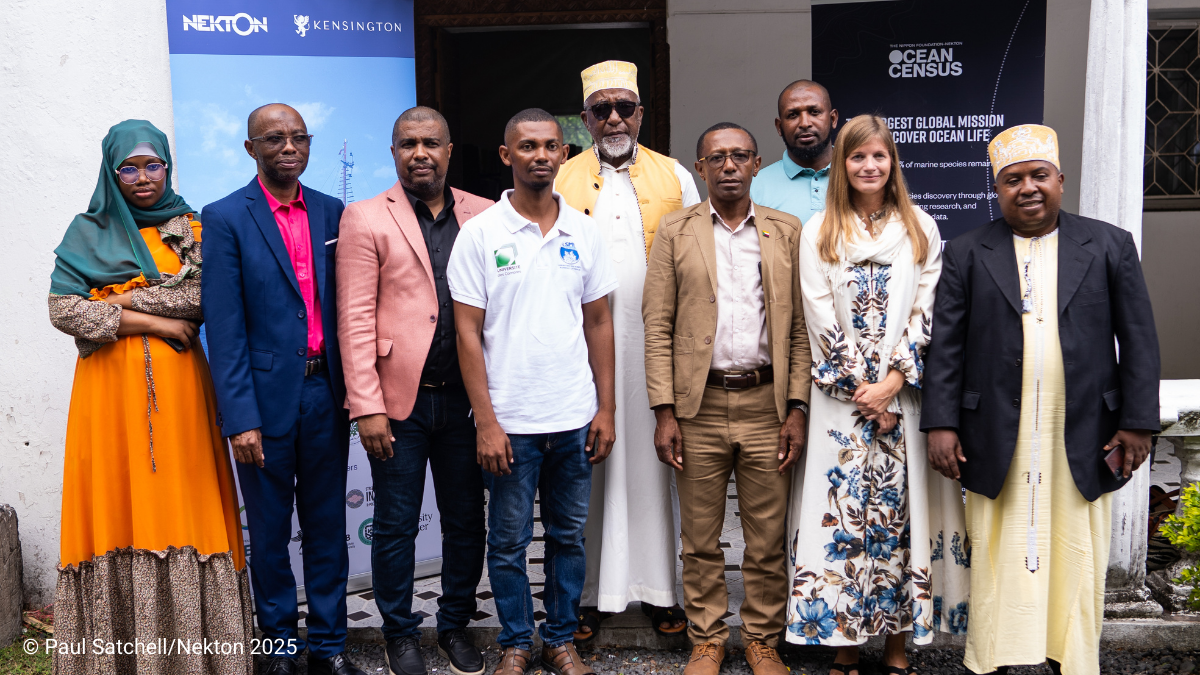
As Comoros President Azali Assoumani told the United Nations General Assembly: “In the Indian Ocean, the Comoros faces a different frontline”, as climate change, habitat degradation, and overfishing continue to affect these biodiverse but vulnerable ecosystems. The expedition supported his Emerging Comoros Plan, advancing national leadership in ocean science, sustainable development, and the blue economy.
The mission was a core component of the Comoros’ R-POC programme (Renforcement de la Protection des Océans aux Comores), a multi-year, multi-organisation effort to provide the data necessary to inform national policy. Comoros has made a bold commitment to protect 30% of its Exclusive Economic Zone (EEZ) by 2030. Currently, only 6% is protected; the data from this mission will support significant conservation commitments in the near future.
At the centre of the mission were Comorian scientists and community voices. Mission Co-Chief Scientist Dr Nadjim Ahmed Mohamed of the University of Comoros, supported by 17 Comorian researchers, led efforts to document unexplored habitats such as mesophotic reefs and deep-water ecosystems.
The team also developed a Comorian-led research programme into the legendary coelacanth—a 410-million-year-old “living fossil” known locally as the Gombessa. Considered extinct until rediscovered by Western science in 1938, a second specimen was found in Comoros in 1952, rewriting biology textbooks and placing the nation at the centre of one of science’s most extraordinary stories. Today, the Gombessa is a powerful marker of national identity and an icon of survival. “Whether it’s the national football team, basketball team, or individual athletes, everyone calls us the coelacanths,” said H.E. Abubakar Ben Mahmoud, Minister of Environment, Union of Comoros. “It is an integral part of our history and our heritage, and something we must preserve, just like our ocean”.
The technology:
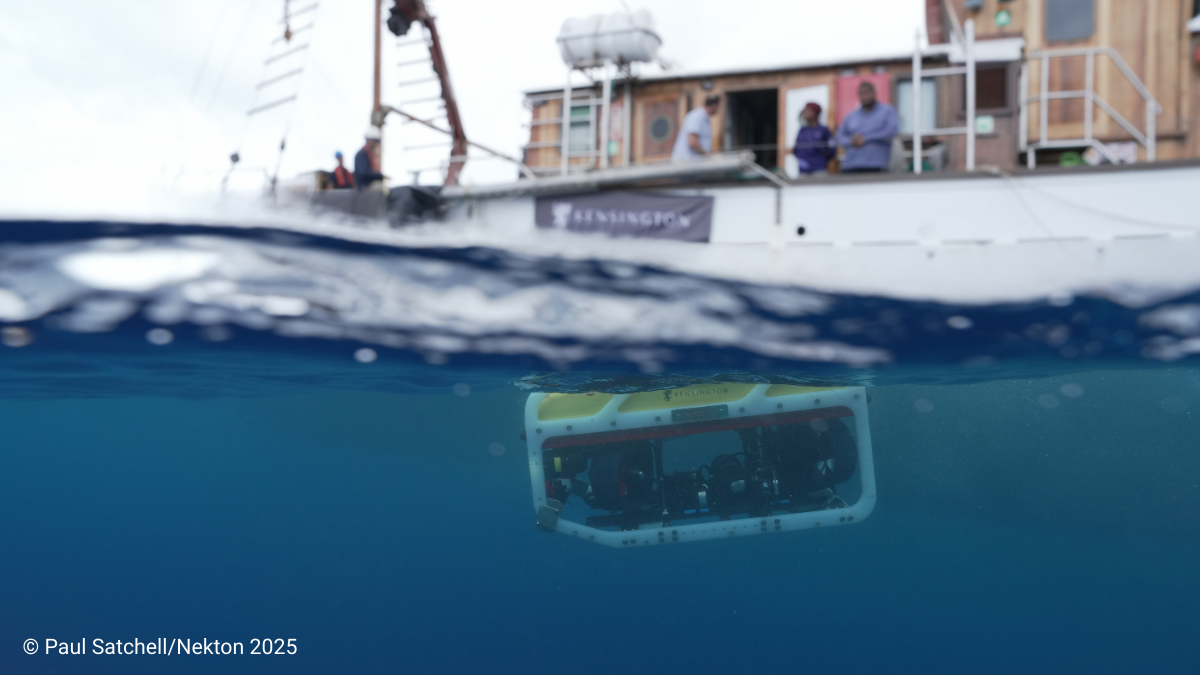
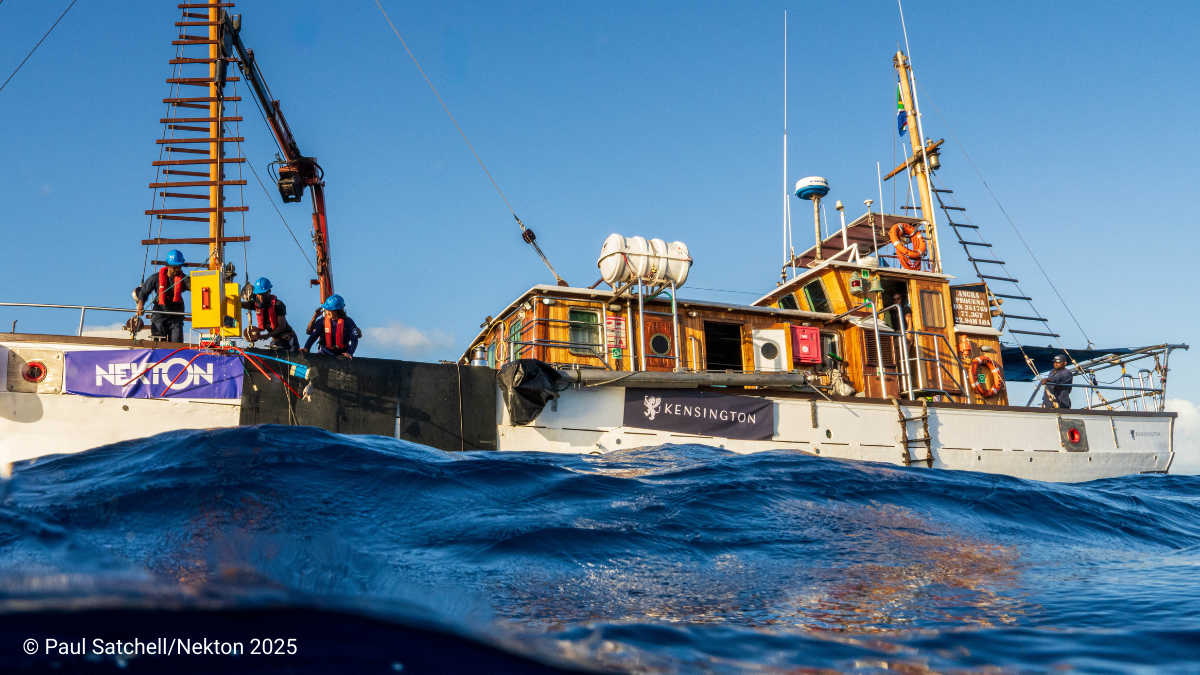
The on-water component of the expedition ran from 6 October to 14 November 2025 aboard the R/V Angra Pequena, a 22-metre research vessel operated by WILDTRUST. The team deployed advanced technologies, including:
- Remotely Operated Vehicles (ROV) for deep-sea surveys.
- Baited Remote Underwater Stereo-Video (stereo-BRUV) landers to monitor marine life.
- High-resolution multi-beam echo-sounders to map the seafloor.
All technologies were provided by the NRF-South African Institute for Aquatic Biodiversity (NRF-SAIAB), and all data and samples remain vested with the Government of the Comoros.
The mission findings:
The mission recorded a stark contrast between shallow and deep waters. In shallower coastal areas, Joshua Rambahiniarison, a shark expert from CORDIO East Africa, noted that some reef-associated shark populations are so low they may be functionally extinct in Comoros, as in other parts of the region.
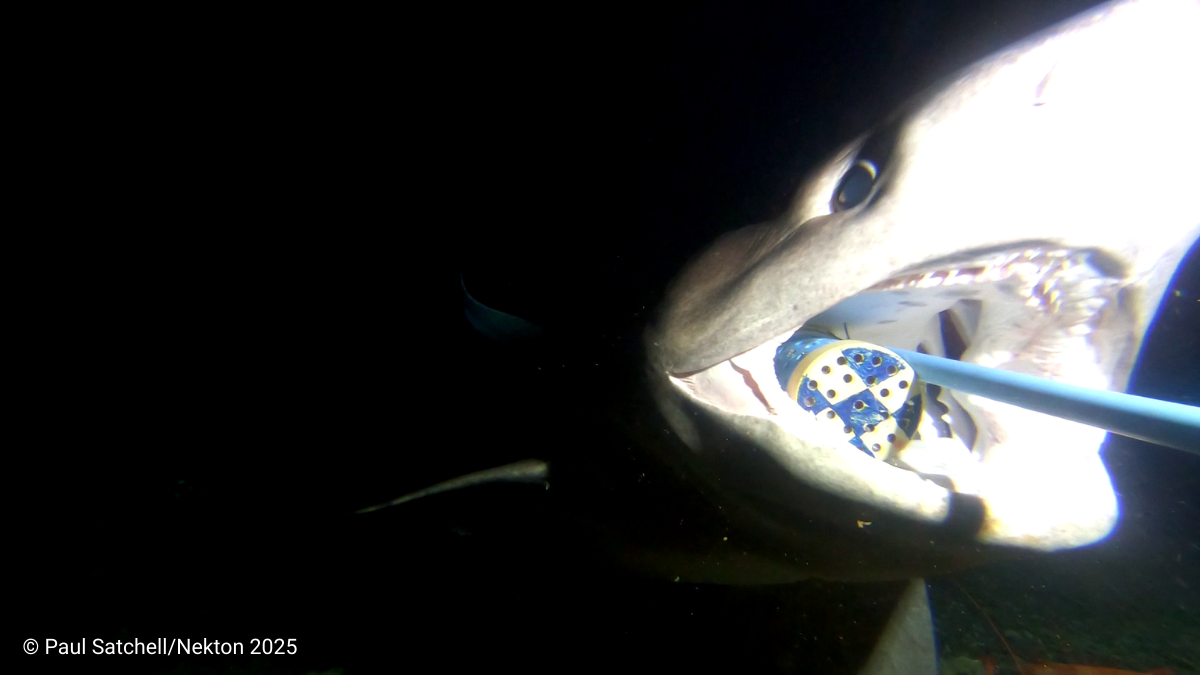
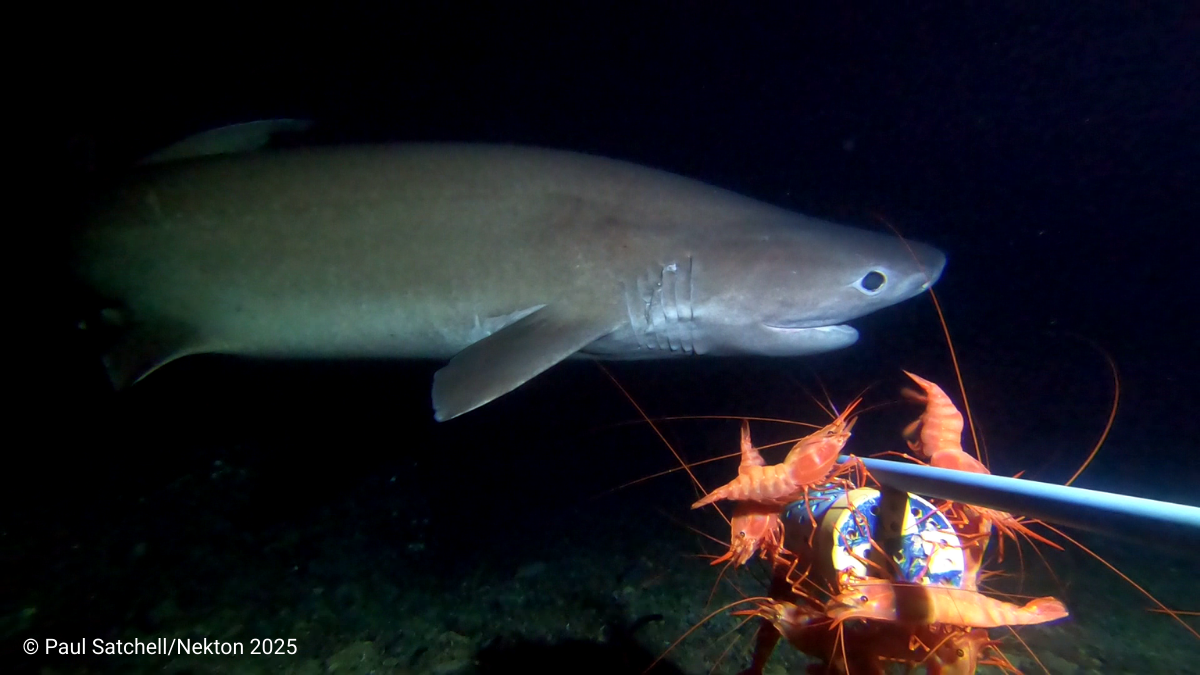
However, the deep-sea offered more encouraging observations, with evidence of functioning shark populations being recorded between 300 and 900 metres, indicating a robust ecosystem at depth. At mesophotic depth (30–150m), flourishing coral and sponge communities were observed, suggesting these deeper reefs may be more resilient to human pressures.
Dr Lucy Woodall, Nekton Principal Scientist and Co-Chief Scientist, reflected: “The stunning coral communities give a lot of hope… there’s now a great opportunity to protect these critical ecosystems and enhance long-term sustainable management”.
The impact of the mission continues with a species discovery workshop taking place at SAIAB in South Africa, held in collaboration with Ocean Census. Comorian scientists are working directly with mission samples to identify and describe species from their own waters for the first time.
This phase focuses on a deep knowledge exchange between local researchers and Nekton team members Nuria Rico Seijo (Laboratory Manager) and Nina de Villiers (Research Assistant). This collaborative effort ensures the mission leaves a lasting legacy, equipping Comorian scientists to be the future stewards of their unique marine heritage.
Thanks to Jack and the Nekton team for sharing this article with us about their recent mission. Learn more about Nekton.
Images: All credit © Paul Satchell/Nekton 2025
